
School Field Studies & Geography Excursions in Sydney
Syllabus-Aligned Coastal and Marine Fieldwork for Students
Give students a practical way to investigate Sydney’s coasts, marine environments and human impacts. Ecotreasures delivers tailored school field studies across Sydney’s beaches, rock platforms, lagoons and aquatic-reserve environments.
Programs support Geography, Marine Studies, Science, Outdoor Education and PDHPE through guided observation, data collection, field sketches, environmental mapping, coastal-process investigations and marine-education activities. Choose a land-based field study, an eligible in-water snorkelling program or a combined coastal investigation.
School Excursions at a Glance
| Detail | Information |
|---|---|
| Suitable year levels | All stages; program suitability varies by activity and learning focus |
| Subjects supported | Geography, Marine Studies, Science, Outdoor Education and PDHPE |
| Program formats | Land-based fieldwork, snorkelling programs, coastal investigations, incursions and tailored combinations |
| Sydney locations | Manly, Long Reef, Mona Vale, Collaroy–Narrabeen, selected Northern Beaches sites and selected Eastern Beaches sites |
| Learning activities | Field observations, primary-data collection, field sketches, environmental mapping, coastal-process studies and citizen science |
| Planning support | Tailored quote, risk-assessment documents, insurance documentation, pre-excursion planning and curriculum discussion |
| Transport | Bus-charter coordination may be available on request |
| Booking | Enquire with preferred date, year group, student numbers, subject focus, location preference and requirements |
Programs are tailored to your class, learning objectives, available time and site conditions. Your proposal confirms the itinerary, supervision arrangements, inclusions, activity requirements and pricing.
What Teachers Say About Our Programs
“We brought our Year 12 Geography students to Shelley Beach, Manly as part of their HSC study on ecosystems, specifically focusing on reefs. The snorkel experience was such a great way for them to connect what they’ve learned in class to a real-world marine environment.”
Luke Gillmer, Scots All Saints College – Bathurst
Why Teachers Choose Ecotreasures
Real Sydney case studies
Students investigate coastal environments in the places where they can see the processes, ecosystems, pressures and management responses first-hand. Locations may include Cabbage Tree Bay Aquatic Reserve, Long Reef Rock Platform, Mona Vale, Collaroy and South Narrabeen.
Fieldwork that supports classroom learning
Programs can be shaped around your subject focus, fieldwork requirements and assessment preparation. Students use practical inquiry skills such as observation, data recording, mapping, sketching, sampling methods and environmental interpretation.
Flexible program formats
Choose a land-based coastal field study, an incursion, an eligible guided snorkelling activity or a combined day. We will recommend a format that suits your year level, learning outcomes, time available and school requirements.
Planning support for teachers
We provide relevant planning documentation and work with teachers before the excursion. This can include risk-assessment information, public-liability insurance documentation, logistical guidance and tailored learning activities, as confirmed in your proposal.
Program Options
Coastal Systems and Marine Ecology
Investigate rocky shores, marine habitats, biodiversity, food webs, ecosystem interactions and human pressures in Sydney’s coastal environments. Students can apply fieldwork methods at places such as Manly, Long Reef and Mona Vale.
Suitable for: Geography, Marine Studies, Science and environmental education.
Coastal Management Case Studies
Examine beach erosion, sediment movement, coastal landforms, development pressures and management responses. Collaroy and South Narrabeen provide locally relevant opportunities to investigate the relationship between people, property and dynamic coastal systems.
Suitable for: Stage 5 and Stage 6 Geography, with adaptable introductory programs for younger students.
Whale Migration and Coastal Observation
Explore marine megafauna, whale migration, conservation, ocean observation, coastal landforms and the opportunities and impacts of wildlife tourism. Wildlife observations are not guaranteed because animals remain wild and conditions vary.
Suitable for: Geography, Marine Studies, Science and environmental education.
Shark Safety and Ocean Education
Develop practical ocean-awareness knowledge through age-appropriate learning about shark behaviour, risk reduction, reading coastal conditions, decision-making and respectful use of marine environments.
Available as: School excursion or school incursion.
Guided Snorkelling and Marine Discovery
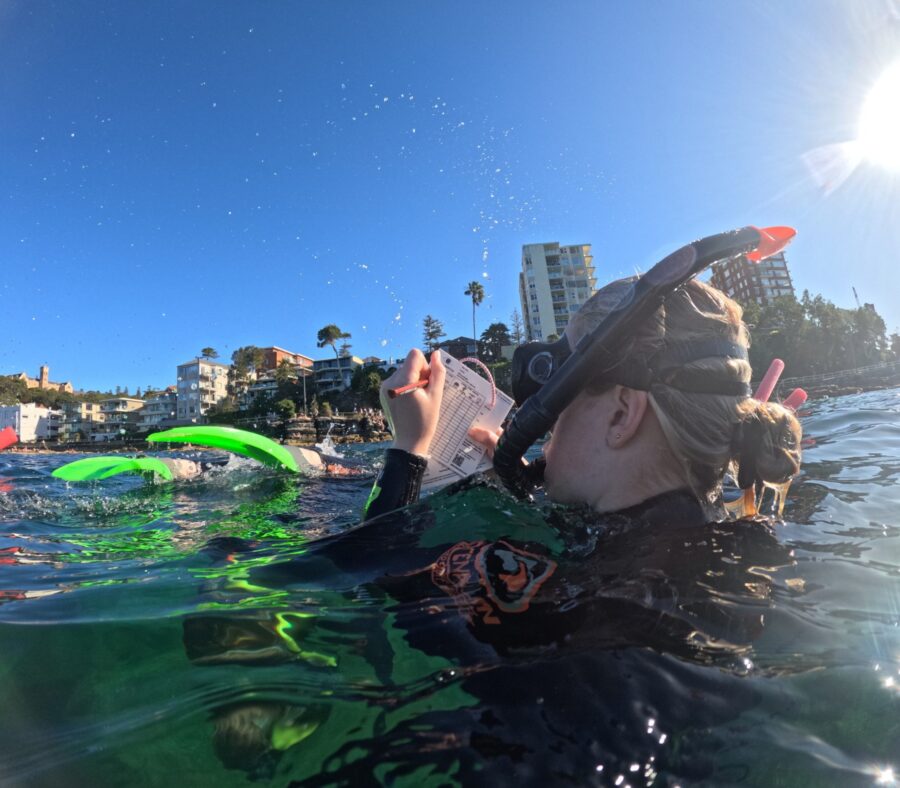
Where conditions, student ability and school requirements allow, add a guided snorkelling component in a suitable protected location. This provides an opportunity to observe marine habitats and species directly.
Important: Participation is subject to the specific program’s safety requirements, student swimming ability, guide assessment, weather and ocean conditions. Include an approved alternative land-based learning option where required.
Safety and Participation
Student wellbeing, active supervision and site-specific planning are central to every Ecotreasures program. Conditions, terrain, tides, weather, ocean state and student needs are considered when planning and delivering an excursion.
For water-based programs, students must meet the confirmed participation requirements. Teachers should provide relevant medical, learning-support, mobility and water-confidence information before the excursion so suitable activity options can be discussed.
Ecotreasures may adjust, postpone, move or cancel activities where weather, ocean conditions, safety assessments or other operational factors make the original plan unsuitable. Your booking information should explain the applicable change, cancellation and contingency arrangements.
Teacher Planning and Inclusions
Your tailored proposal can confirm:
- Program objectives and planned fieldwork activities
- Recommended study location and excursion duration
- Risk-assessment and insurance documentation
- Teacher pre-excursion planning information
- Student worksheets or activity resources, where included
- Equipment and activity requirements, where applicable
- Transport or bus-charter coordination, where requested
- Citizen-science additions, such as CoastSnap or iNaturalist observations
- Wet-weather, heat, tide and water-condition contingencies
- Pricing, deposit, cancellation and booking conditionsTo prepare an accurate quote, please include your year group, student number, preferred date, subject or syllabus focus, available time, transport needs and any accessibility or medical considerations
Essential FAQs
Which year levels are these programs suitable for?
Programs can be adapted for all stages. The recommended year level depends on the site, learning objectives, fieldwork methods and activity format. Tell us your subject, year group and learning focus when you enquire.
Are programs aligned with the NSW syllabus?
Programs are designed to support fieldwork, inquiry and topic areas relevant to NSW subjects including Geography, Marine Studies, Science, Outdoor Education and PDHPE. Teachers should confirm the final program’s relevance to their current syllabus, school requirements and intended assessment outcomes.
How many students can attend?
Capacity depends on the location, program format, supervision model, staffing, student needs and environmental conditions. Provide your student numbers and teacher-to-student ratio when requesting a quote.
What documents do you provide for excursion approval?
We can provide the relevant risk-assessment information, public-liability insurance documentation and planning details for your proposed program. Allow sufficient lead time for your school’s approval process.
Do students need to be strong swimmers?
Land-based programs do not require swimming. For snorkelling or other in-water activities, students must meet the confirmed swimming and participation requirements. Alternatives should be discussed for students who cannot safely participate in water-based activities.
What happens in poor weather?
We assess conditions before and during the program. If conditions make the planned activity unsuitable, we may adapt the route, use a land-based activity, postpone or cancel according to the agreed booking terms and safety procedures.
Can you arrange bus transport?
Bus-charter coordination may be available for some groups. Tell us your pickup location, group size and preferred timing so we can confirm options and costs.
Programs/Case study
| Program / Case study | Main subject area(s) | Typical NESA unit / focus | Key topics / concepts | Stages / years most suited* |
| Manly Cabbage Tree Bay Marine Field Study (snorkel + land) | Geography, Marine Studies, Science | Ecosystems at Risk; Coastal Environments; Marine Environments | Marine biodiversity, reef/rocky reef ecology, adaptations, threats to marine ecosystems, conservation | Stage 5 & 6 Geography (Y9–12), Stage 6 Marine Studies |
| Queenscliff Lagoon to Shelly Beach coastal study | Geography, Science | Coastal Processes & Landforms; Environmental Change and Management | Coastal geomorphology, erosion and deposition, human impacts, management strategies | Stage 4 & 5 Geography (Y7–10); intro Stage 6 |
| Long Reef Rock Platform Case Study | Geography, Marine Studies, Science | Ecosystems at Risk; Biophysical Interactions; Marine Ecosystems | Rocky shore zonation, biodiversity, intertidal adaptations, field sampling methods, human pressures | Stage 4–6 Geography; Stage 6 Marine Studies |
| Mona Vale Beach & Rock Platform Field Study | Geography, Science | Coastal Environments; Landscapes and Landforms; Fieldwork Skills | Wave energy, beach profiles, dunes, rock platform ecology, land use conflict, field measurements | Stage 4 & 5 Geography |
| Collaroy & South Narrabeen Coastal Management | Geography | Environmental Change and Management; Urban Places / Coastal Communities | Beach erosion events, property risk, hard vs soft engineering, stakeholder perspectives | Stage 5 Geography; Stage 6 Geography (HSC case study) |
| Coastal Whale Walk – Migrating Giants | Geography, Marine Studies, Science | Global Environments; Oceans and Marine Life; People and Economic Activity (whale tourism) | Whale migration, marine megafauna, habitat use, conservation, eco‑tourism, observation techniques | Stage 4 & 5 Geography; Stage 6 Marine Studies |
| Shark Safety & Ocean Education – Excursion | PDHPE, Marine Studies, Outdoor Education | Water Safety and Risk; Marine Environments; Recreational Use of the Coast | Shark behaviour, risk management, surf and ocean safety, decision‑making, respectful marine use | Stage 4–6 PDHPE; Stage 6 Marine Studies |
| Shark Safety & Ocean Education – Incursion | PDHPE, Marine Studies, Whole‑school wellbeing | Health, Safety and Wellbeing; Risk and Resilience | Understanding risk, reading conditions, safety planning, myths vs facts about sharks | Stage 3–6 mixed, depending on delivery |
| General Coastal Systems & Marine Ecology (any study site) | Geography, Marine Studies, Science | Biophysical Interactions; Ecosystems at Risk; Sustainable Biomes | Systems approach to coast, energy transfers, food webs, human impacts, sustainability, field skills | Stage 4–6 Geography; Stage 6 Marine Studies |
| Whale migration + citizen science add‑on (CoastSnap / iNat) | Geography, Science, Marine Studies | Geographical Inquiry & Skills; Earth’s Environmental Interactions | Data collection, photographic monitoring, species observations, temporal change | Stage 4 & 5 Geography; Science inquiry units |